
Once someone has decided they want veneers, the next question is almost always the same one: composite or porcelain. They are marketed as the budget option and the premium option, which is true as far as it goes and misses most of what actually matters.
They are made differently, fitted differently, last different lengths of time, and fail differently. Here is the comparison as we would give it in the chair.
How each one is made
A composite veneer is built directly onto your tooth by the dentist, in the chair, in one appointment. It is the same tooth-coloured resin used for white fillings, shaped and polished by hand. The result depends heavily on the skill of the person doing it, because it is sculpted rather than manufactured.
A porcelain veneer is made in a dental laboratory from an impression of your prepared tooth, then bonded on at a later visit. A technician makes it, which is why it takes two or three appointments and why the finish is more consistent.
Appearance
Porcelain wins here, and the reason is physical rather than a matter of opinion. Enamel is slightly translucent, so light passes into it and scatters. Porcelain does the same thing. Composite is more opaque, so on a front tooth in bright light it can read as slightly flat next to natural teeth.
On a single tooth in a less prominent position, most people cannot tell. Across the whole front of the smile in a Queenstown summer, the difference is easier to see.
How long each lasts
Porcelain typically lasts ten to fifteen years or more with reasonable care. It does not stain, and it holds its polish.
Composite generally lasts five to eight years. It picks up stain over time from coffee, tea, red wine and smoking, and the surface gradually loses its shine. It can be polished up again at a check-up, which helps, but it is not permanent in the way porcelain is.
What happens to your own tooth
This is the part people think about least and should think about most.
Porcelain usually requires removing a thin layer of enamel so the veneer sits flush rather than bulking the tooth out. Enamel does not grow back, so that tooth will need a veneer or a crown on it from then on. It is a permanent decision.
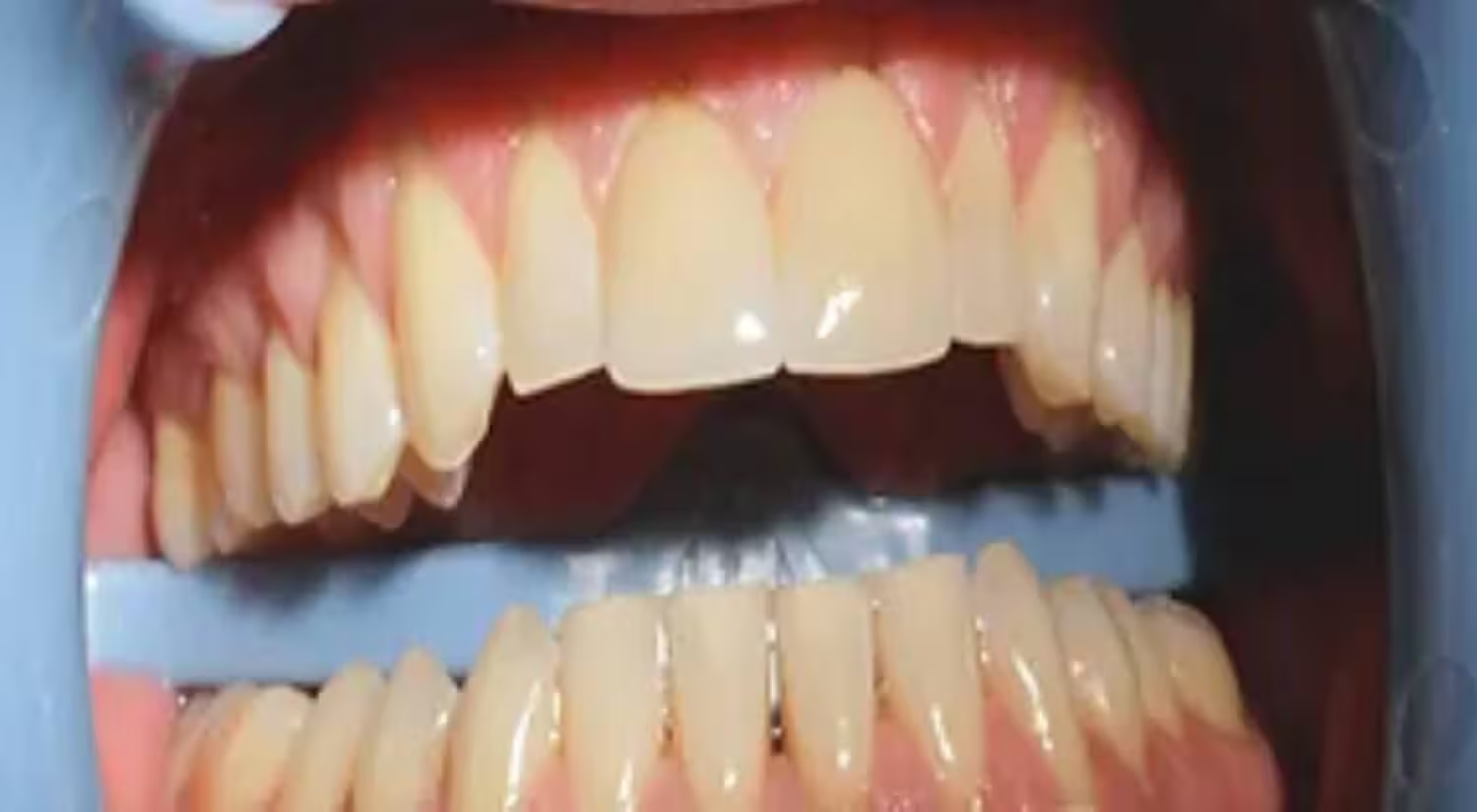
Composite often needs little or no enamel removed, and in some cases none at all. That makes it reversible, or close to it, which matters a great deal if you are in your twenties and making a cosmetic decision you may feel differently about later.
Repairs and what happens when something goes wrong
Composite chips more easily, and it is straightforward and inexpensive to repair. We add material, reshape and polish, usually in one short visit.
Porcelain is harder and chips less often, but when it does chip it generally cannot be repaired properly. The veneer is replaced, which means the laboratory process again. Strong porcelain that fails tends to fail completely rather than a little.
Cost, honestly
Composite costs less per tooth. Porcelain costs more per tooth and lasts roughly twice as long, so over fifteen years the gap narrows considerably and can close entirely once you count replacing the composite once or twice.
That maths only works if you keep them that long. If you want a change for a particular reason and are not committing to a lifetime, composite is the sensible spend. We give you the figure for both after the consultation, before anything is booked.
Which one suits which situation
There is no universally better answer, but there are clear patterns.
- One chipped or slightly out of line front tooth: composite, almost always. It is quick, it is repairable, and it can be matched to the teeth either side without touching them.
- A full set of front teeth where you want an even, lasting result: porcelain. The consistency a laboratory gives across six or eight teeth is difficult to match by hand.
- You are young and unsure: composite, because keeping your enamel keeps your options open.
- You grind your teeth: neither, until the grinding is managed with a night guard. Both chip under that force, and porcelain is the more expensive thing to break.
- You smoke or drink a lot of coffee and want it to stay looking the same: porcelain, because composite will pick up stain.
- Your teeth are significantly crooked or crowded: probably neither. Orthodontics gives a better and more lasting result than covering the problem.
Whiten first, whichever you choose
Neither material changes colour once it is placed. If you want a brighter smile overall, we whiten your natural teeth first, let the shade settle, then match the veneers to it. Doing it the other way round leaves the veneers looking wrong within a fortnight of whitening the teeth around them.
Where to start
With a consultation rather than a decision. We look at the teeth, the bite and the gums, talk about what you want to change, and tell you honestly which option fits, including when the answer is neither. We are at 12 Lake Esplanade in central Queenstown with free off-street parking. Ring 03 441 8248 or send a message.
General information, not a diagnosis. Written and reviewed by Dr Adrian Paul, BDS (Otago), principal dentist at Lakeside Dental Practice, Queenstown. If something is worrying you, see a dentist.