
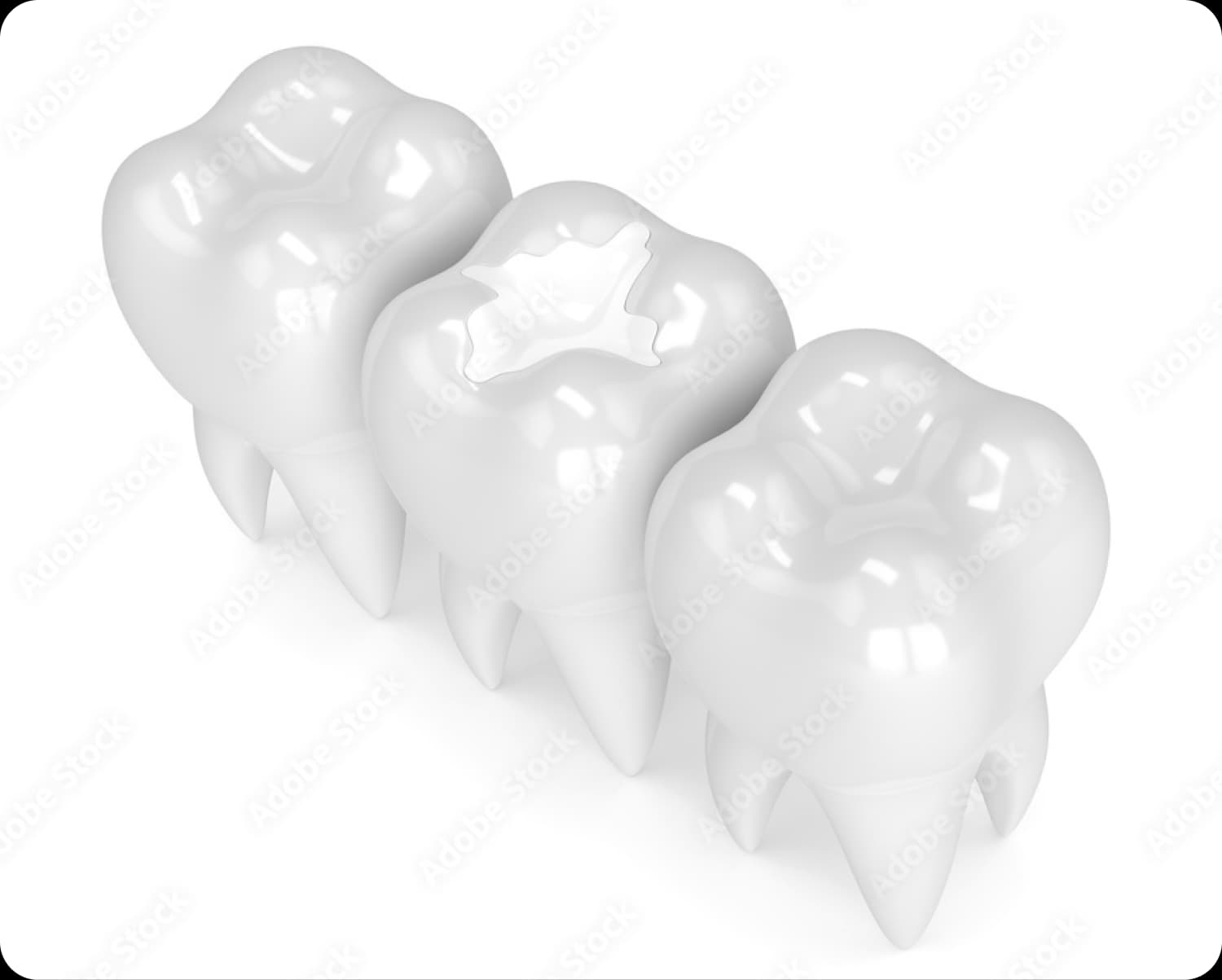
Why composite rather than amalgam
The obvious difference is appearance, but the more important one is how it is held in place. Amalgam relies on the cavity being cut to a shape that mechanically locks it in, which means removing sound tooth structure to create undercuts. Composite bonds chemically to the tooth, so we only need to remove the decay itself.
Over a lifetime of dentistry, that difference in conserved tooth structure adds up.
What we use it for
Composite is not only for decay. Modern nanotechnology composites are strong enough for chewing surfaces and polish well enough for front teeth.
- Repairing decay
- Rebuilding chipped or broken edges
- Closing small gaps between front teeth
- Covering worn areas at the gum line where enamel has been lost
- Replacing old amalgam fillings that have failed or are leaking
What to expect
The tooth is numbed, the decay removed, and the composite placed in layers and set with a curing light. It is shaped, the bite checked, and polished - all in one appointment, and the filling is fully set before you leave.
Some sensitivity to cold for a few days afterwards is normal, particularly on a deep filling. If it is getting worse rather than better after a week or two, let us know.
When a filling is not enough
There is a limit. Once too much of the tooth is gone, a filling has nothing to hold on to and the remaining walls are at risk of splitting. At that point a crown is the more sensible option, and we will tell you when you have reached it.