
Dental problems have a habit of arriving at the worst possible time - the night before a flight, halfway up a ski field, or at four o'clock on a Friday. Queenstown is a physical town, and between the bike park, the mountains and the lake we see a steady stream of people who need help today, not next week.
The trouble is that almost nobody knows what counts as urgent. Some things can safely wait a day or two. A few cannot wait an hour. This guide walks through the situations we see most, what to do in the meantime, and how to get seen quickly.
First: is it a dentist, or is it the hospital?
A small number of dental problems are beyond a dental chair and need an emergency department. Go to hospital, or call 111, if you have any of these:
- Swelling that is closing an eye, spreading down your neck, or making it hard to swallow or breathe
- A jaw you think may be broken - it will not close properly, or the teeth no longer meet the way they did
- Bleeding after an injury that will not stop with firm pressure
- A head injury alongside the dental one - loss of consciousness, confusion or vomiting
A tooth knocked out
This is the one that is genuinely time-critical. The cells on the root surface start to die within minutes of the tooth drying out, and the chance of saving it drops sharply with every half hour.
Pick the tooth up by the crown - the white part - and never by the root. If it is dirty, rinse it briefly in milk. If you can, put it straight back in the socket the right way round and bite gently on a clean cloth. If you cannot, keep it in milk, and ring us on the way in. Do not wrap it in a tissue and do not let it dry out.
This applies to adult teeth. A knocked-out baby tooth is not replanted, but the child should still be checked.
A chipped, cracked or broken tooth
Urgent, but not minute-by-minute urgent. Save any pieces in milk - a fragment can sometimes be bonded straight back on. If a sharp edge is cutting your tongue or cheek, cover it with sugar-free chewing gum or dental wax from a pharmacy.
Get it looked at within a day or two even if it does not hurt. A chip exposes the softer layer under the enamel, and that is a direct route for bacteria towards the nerve. Small chips are quick and cheap to fix. What they turn into is not.
Toothache
The character of the pain tells us a lot, so pay attention to it before you ring. A sharp twinge with cold that fades in seconds usually means sensitivity or early decay. A constant throbbing ache, worse at night or when you lie down, usually means the nerve is inflamed and the tooth needs treating soon. Pain only when you bite down often points to a crack.
In the meantime, ordinary over-the-counter pain relief taken as directed works well. Do not put aspirin against the gum - it burns the tissue. Do not put heat on the outside of your face, which can make an infection worse. A cold compress is fine.
Pain that stops on its own is not always good news. A nerve that dies stops hurting, and then the infection starts. If a bad toothache suddenly vanishes, still come in.
Swelling, an abscess or a bad taste
A swollen gum, a pimple on the gum that comes and goes, a bad taste, or a face that is puffy on one side all point to infection. This does not settle on its own, and antibiotics by themselves do not fix it - they buy time while the source is dealt with, which usually means treating or removing the tooth.
Ring us the same day. If the swelling is spreading or affecting your swallowing, see the hospital section above.
A lost filling or crown
Not usually an emergency, but not something to sit on for weeks either. The tooth underneath is exposed, often sensitive, and more likely to break. If a crown has come off, keep it - it can often be cemented back on. A pharmacy temporary cement will hold it in the short term, and helps if you are travelling.
Avoid chewing on that side and book in within a few days.
Wisdom tooth pain
A wisdom tooth that is partly through the gum traps food and bacteria under a flap of tissue, and the result is a sore, swollen gum at the back of the mouth that can make it hard to open wide. Warm salt water rinses help, and ordinary pain relief helps. It tends to recur, and it is usually the point at which we talk about taking the tooth out.
If there is swelling in your cheek or you are struggling to swallow, that has moved beyond a sore gum - ring us today.
How same-day care works here
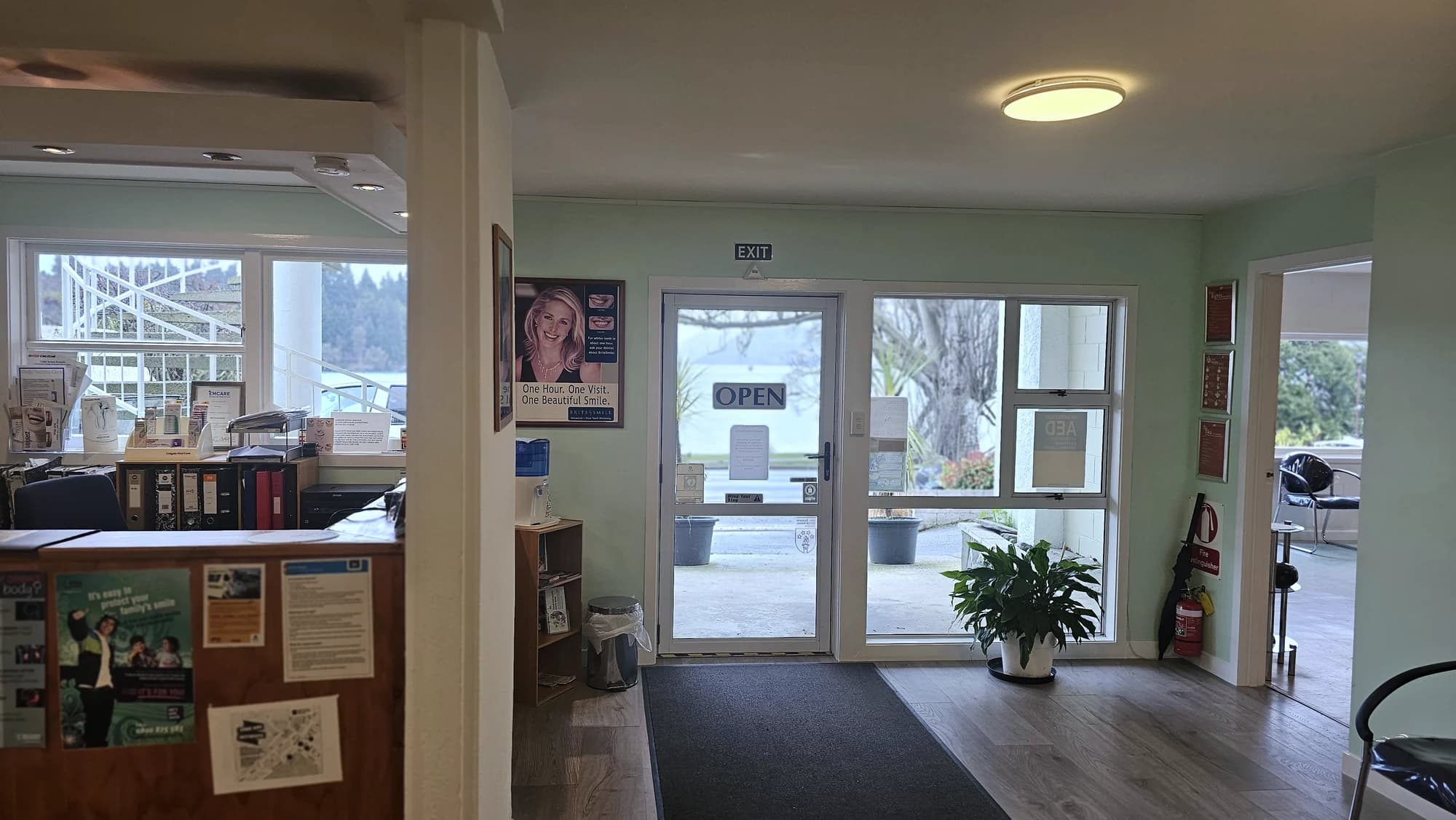
We keep room in every day for emergencies and can usually see you the same day, often at the end of the afternoon. You do not need to be an existing patient, and you do not need a referral. Ring 03 441 8248 as early in the day as you can - a call at nine gives us far more options than a call at four - and tell us plainly what has happened, whether you are in pain, and whether you are flying out.
Outside our Monday to Friday, 9am to 5pm hours there is an on-call emergency service by request. Ring the practice number and follow the instructions.
We are at 12 Lake Esplanade in the centre of Queenstown, with free off-street parking at the door. If you had an accident, ACC will often contribute to the cost, and we lodge the claim for you at the appointment.
General information, not a diagnosis. Written and reviewed by Dr Adrian Paul, BDS (Otago), principal dentist at Lakeside Dental Practice, Queenstown. If something is worrying you, see a dentist.