Losing a tooth - to an accident, an infection, or a tooth that finally could not be saved - leaves a decision. The two main ways to fill the gap are a dental implant and a bridge, and they are different enough that the right answer depends on the tooth, the teeth beside it, and you.
This is the comparison we walk people through in the chair.
Why the gap matters
It is tempting to leave a missing back tooth alone. The trouble is that teeth move. The ones either side tip into the space, the one above or below drifts towards it, and the bite gradually changes. The jawbone that held the root also shrinks once there is no root to hold, which makes replacement harder the longer you wait.
None of that happens overnight. It does happen, which is why we would rather have the conversation now than in five years.
A dental implant
An implant is a small titanium post placed in the jawbone where the root used to be. The bone heals around it over a few months, and then a crown is fitted on top. The result is a tooth that stands on its own, looks and works like the original, and can last decades.
- It does not touch the teeth either side - they are left exactly as they are.
- It stops the bone shrinking, because the bone has something to hold again.
- It is cleaned like a natural tooth, with a brush and floss.
- It is the longest-lasting option, and the crown on top can be replaced without disturbing the implant.
The trade-offs with an implant
It is a surgical procedure, done under local anaesthetic with sedation available, followed by a healing period of several months before the final crown goes on. You need enough healthy bone to hold it, and if bone has already been lost that sometimes means a graft first. It is also the higher upfront cost, though over a lifetime it is often the cheaper one because it is not replaced.
Smoking and uncontrolled diabetes make implants less predictable, and that is a frank conversation we will have with you before anything is booked.

A bridge
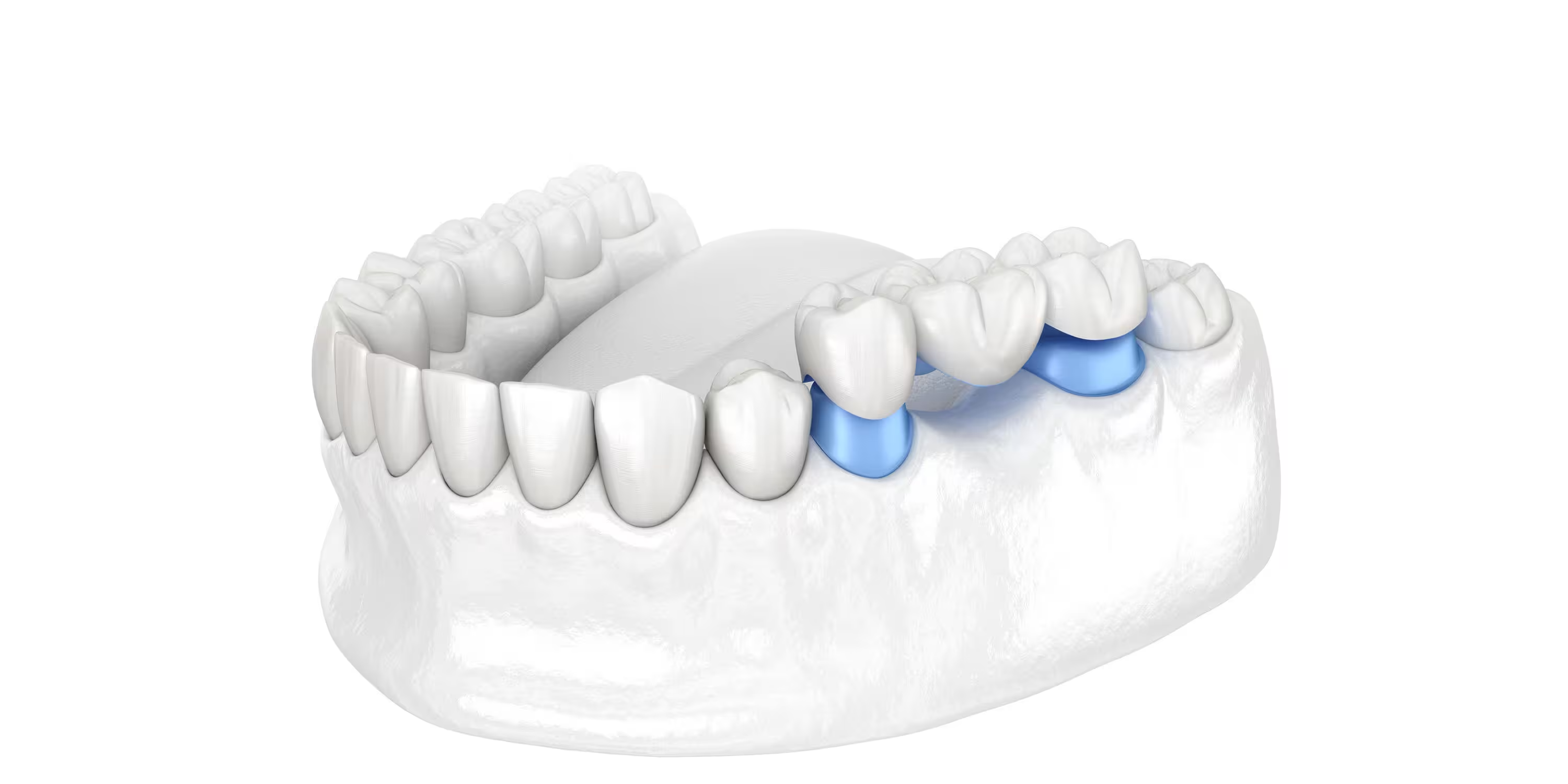
A bridge fills the gap with a false tooth that is anchored to crowns on the teeth either side. Those neighbouring teeth are shaped down to take the crowns, impressions are taken, and the bridge is fitted a couple of weeks later. It is fixed in place - not removable like a denture.
- It is quicker. Two or three appointments, no surgery, no months of healing.
- It is the lower upfront cost.
- It is a good option where an implant is not possible - not enough bone, or a medical reason to avoid surgery.
- If the teeth either side already need crowns, a bridge does two jobs at once.
The trade-offs with a bridge
It depends on the neighbouring teeth, and it means removing healthy enamel from them if they were sound. Those teeth then carry the load of three. The bone under the gap keeps shrinking, because nothing is in it. And a bridge has a working life - typically ten to fifteen years - after which it is replaced, usually along with the crowns beside it.
It also needs a little more care to clean underneath, which is where floss threaders or an interdental brush come in.
The third option
A partial denture replaces one or more teeth with a removable plate. It is the least expensive and least invasive, and it is the right choice for some people. It is also the least stable, and most people who can have an implant or a bridge prefer one of those. We include it here because it is a real option, not a lesser one.
How we decide
We look at the bone in the gap, the health of the teeth either side, your general health, what you want to spend, and how quickly you want it done. A single missing back tooth with sound neighbours and good bone is usually an implant. A gap with heavily filled neighbours that need crowns anyway is often a bridge. A gap where the bone has gone and grafting is not appealing is a bridge or a denture.
If the tooth was lost in an accident, ACC will often contribute to replacing it, and we lodge that claim for you. Either way, you get the full figure before you decide. We are at 12 Lake Esplanade in central Queenstown with free off-street parking - ring 03 441 8248 or send a message to book an assessment.
General information, not a diagnosis. Written and reviewed by Dr Adrian Paul, BDS (Otago), principal dentist at Lakeside Dental Practice, Queenstown. If something is worrying you, see a dentist.