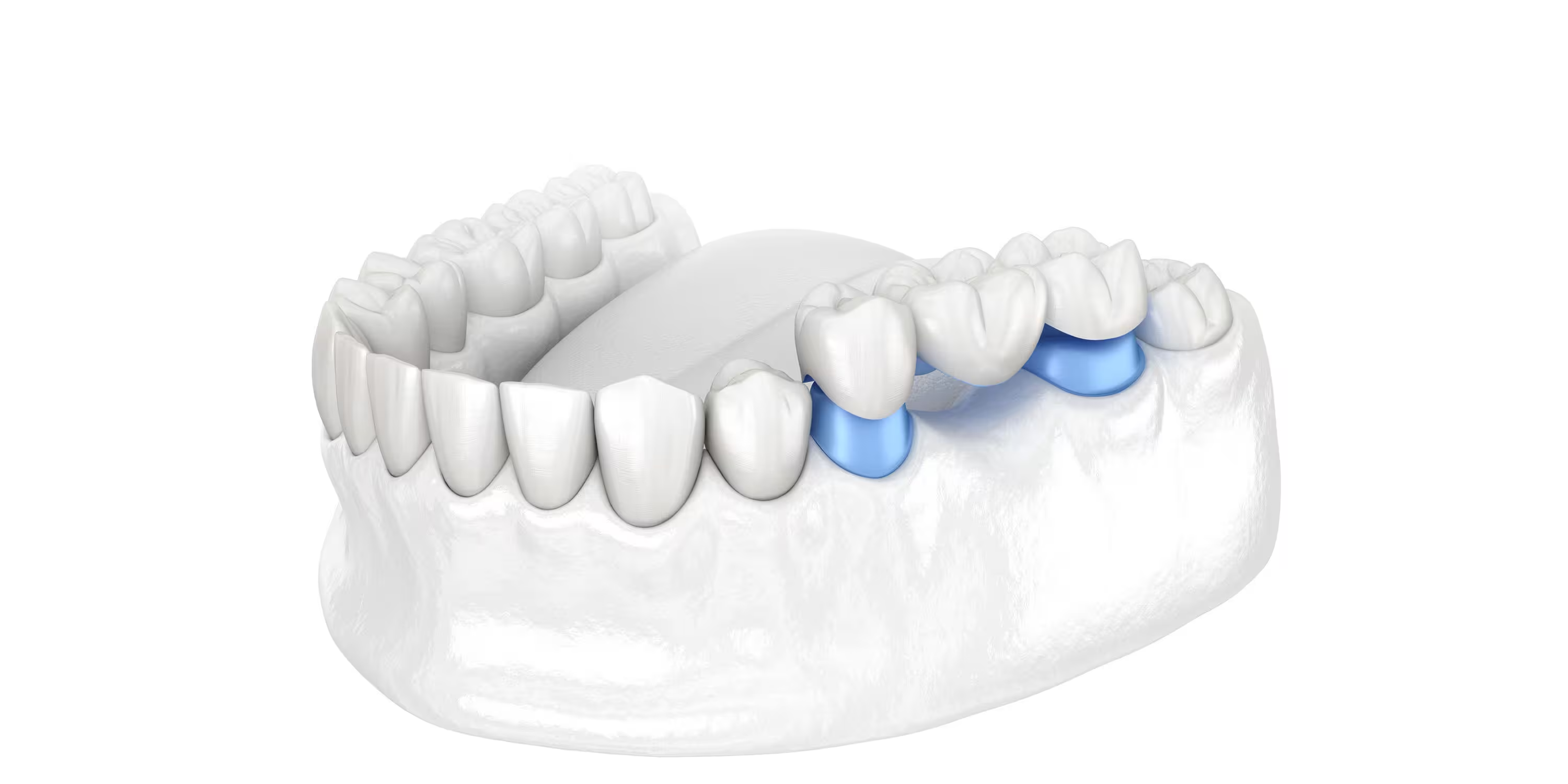

A veneer is a thin shell, usually porcelain, bonded to the front of a tooth to change its shape, colour or size. Done well, on the right teeth, a set of veneers changes a smile more than any other single treatment we offer. Done on the wrong teeth or for the wrong reasons, they disappoint.
So this is a plain guide to what they are for, the choices involved, and what the process actually looks like.
What veneers are good at
Veneers work best on front teeth that are structurally sound but do not look the way you want.
- Discolouration that whitening cannot shift - from old injury, childhood medication, or heavily marked enamel
- Chips and worn edges that keep the front teeth looking short or uneven
- Small gaps between front teeth
- Teeth that are slightly crooked, rotated or a little too small, where the goal is a straighter-looking smile without braces
- A single front tooth that does not match its neighbours
What they are not for
Veneers are cosmetic. They do not fix a tooth with decay, an unhealthy gum, or a tooth that needs a root canal - that work comes first. They are not the answer to significantly crooked or crowded teeth, where orthodontics gives a better and more lasting result. And they are not ideal for people who grind heavily without a night guard, because porcelain can chip under that force.
The honest assessment at the start is the most important part of the whole process, and it sometimes ends with us recommending something else.
Porcelain or composite?
This is the main decision. Porcelain veneers are made in a dental laboratory from an impression of your teeth, and are bonded on at a later visit. Composite veneers, sometimes called bonding, are built directly onto the tooth by the dentist in a single appointment.
Porcelain looks the most natural, resists staining, and lasts longest - ten to fifteen years or more with care. It costs more, and it usually means removing a thin layer of enamel, which makes it a permanent change. Composite is quicker, less expensive and more easily repaired or reversed, but it picks up stain over time and generally lasts five to eight years before it needs redoing.
For a single tooth or a small repair, composite is often the sensible choice. For a full set of front teeth, porcelain is usually worth it.
The process
Porcelain veneers take two or three visits over a few weeks.
- Consultation and planning. We look at your teeth and your bite, talk about what you want to change, and agree the shade and shape. For larger cases a mock-up shows you the result before anything is done.
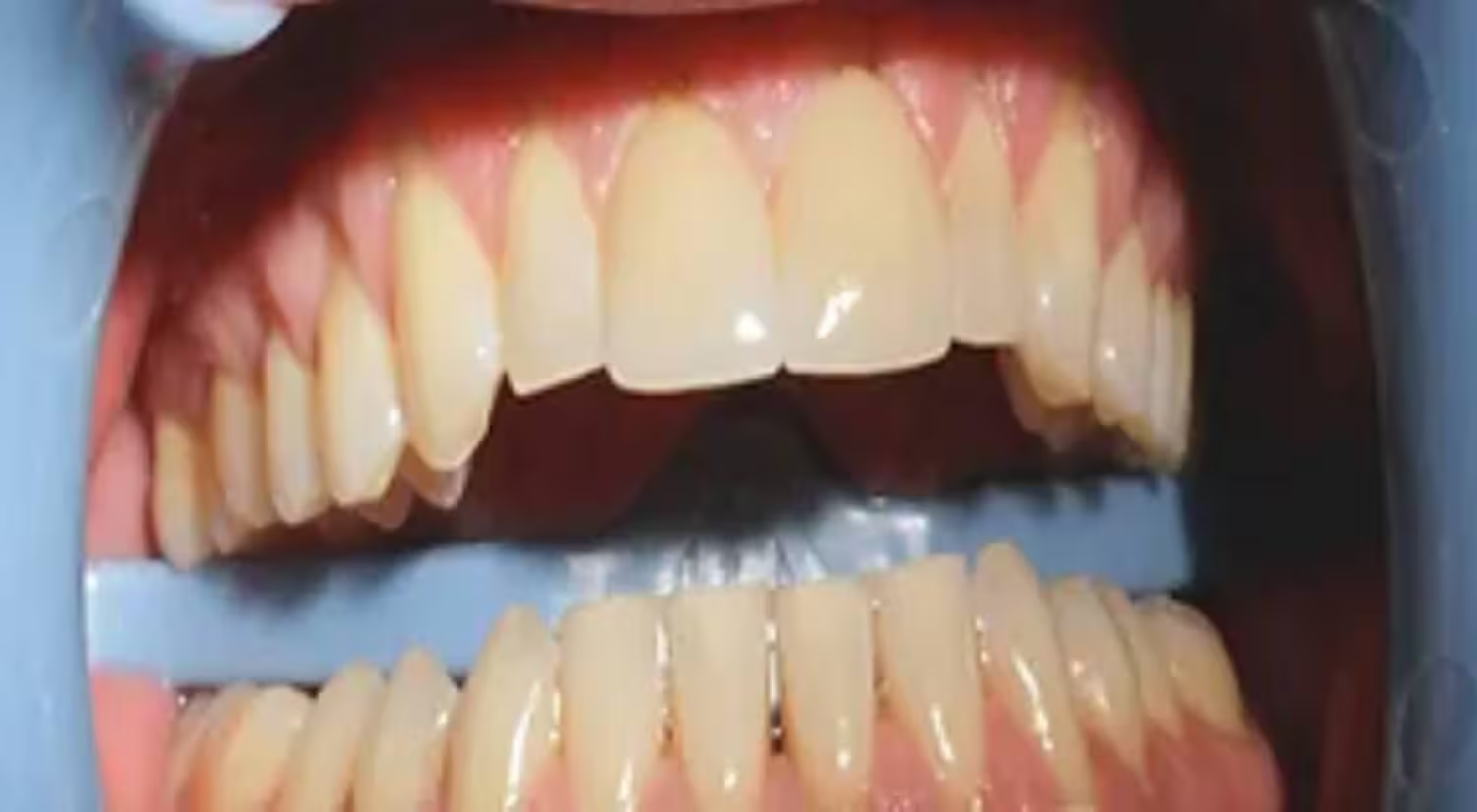
- Preparation. A very thin layer of enamel is removed from the front of each tooth so the veneer sits flush, impressions are taken, and temporary veneers go on. This is done under local anaesthetic and is comfortable.
- Fitting. The porcelain veneers come back from the laboratory, we try them in, check the fit and colour with you, and bond them on. Small adjustments to the bite are made and you leave with the finished smile.
Whiten first
Porcelain does not change colour once it is made. If you want a whiter smile overall, we whiten your teeth first and then match the veneers to the new shade - never the other way round. Otherwise the veneered teeth end up a different colour from the ones around them.
Looking after them
Veneers are cleaned exactly like your own teeth, with brushing and cleaning between them. Avoid biting nails, opening things with your teeth, and chewing ice. If you grind, a night guard protects the investment. Regular check-ups let us keep an eye on the edges and the gums around them.
Cost, and the first step
The cost depends on how many teeth, porcelain or composite, and how much planning is involved, and we give you the full figure after the consultation and before anything is booked. The first step is that consultation - come in, tell us what you would like to change, and we will tell you honestly whether veneers are the right way to do it. We are at 12 Lake Esplanade in central Queenstown with free off-street parking. Ring 03 441 8248 or send a message.
General information, not a diagnosis. Written and reviewed by Dr Adrian Paul, BDS (Otago), principal dentist at Lakeside Dental Practice, Queenstown. If something is worrying you, see a dentist.