

Pain on biting is one of the more useful symptoms in dentistry, because it narrows things down considerably. A tooth that aches on its own, a tooth that reacts to cold, and a tooth that hurts specifically when you bite are usually three different problems.
It is also the symptom people most often ignore, because between meals the tooth feels completely normal.
The pattern that matters most
Here is the detail worth paying attention to: does it hurt when you bite down, or when you let go?
Sharp pain on release - the moment pressure comes off - is close to a signature for a cracked tooth. The crack opens slightly under load and the two halves move independently. When you release, they snap back together and the nerve inside registers it. If you have ever had a sharp jolt biting into something and then nothing at all, that is the pattern.
This is called cracked tooth syndrome, and it is frustrating precisely because the tooth looks fine. Cracks are often invisible on an X-ray, because an X-ray shows a crack from the side and most run in the wrong plane to be seen.
Other things that cause biting pain
Not everything is a crack.
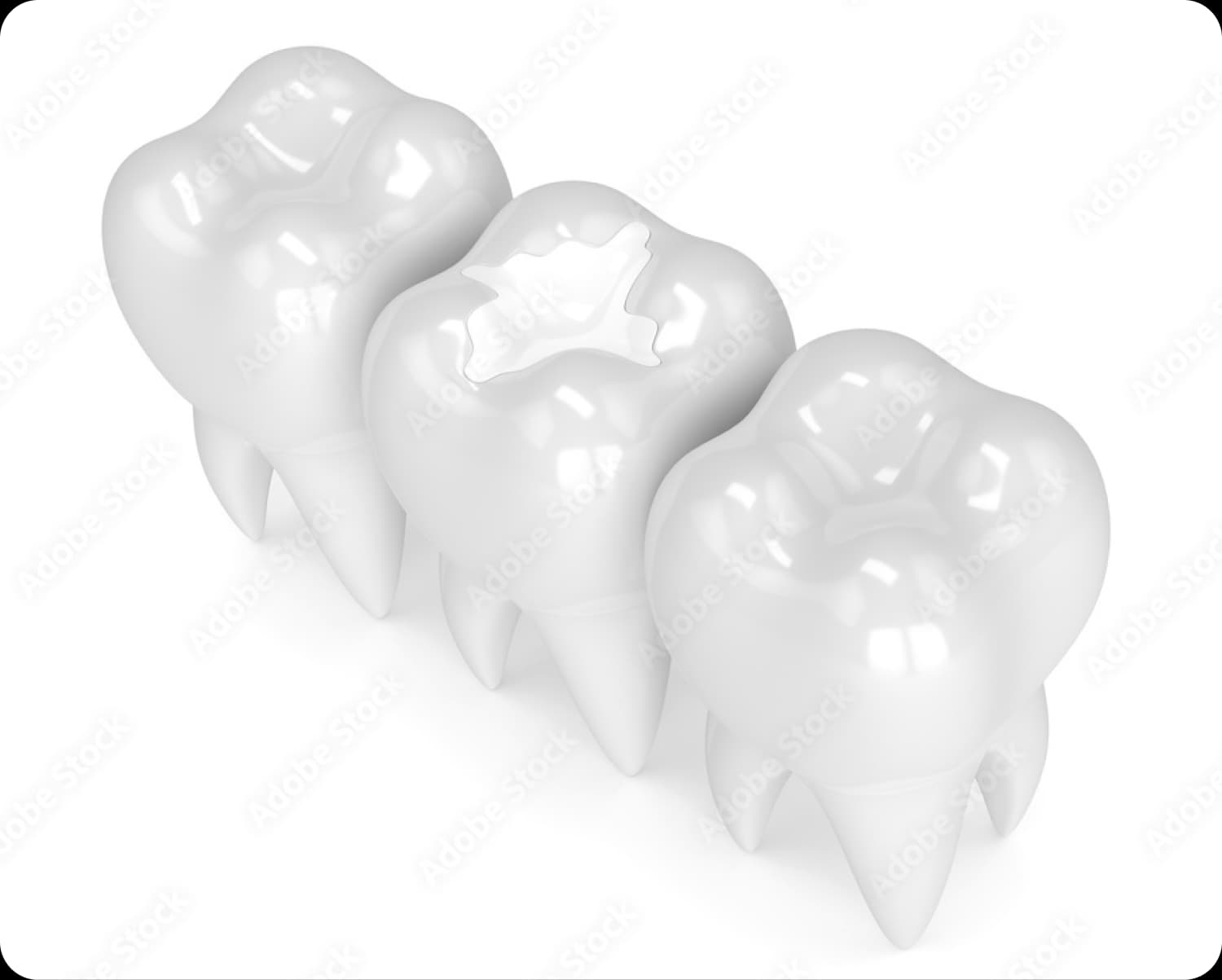
- A high filling or crown - if the pain started right after dental work, the restoration may simply be sitting a fraction too tall and taking all the force
- Inflammation around the root, often from an infection inside the tooth, which makes the tooth tender to any pressure
- A loose or failing filling moving slightly under load
- Gum inflammation, or something wedged between the teeth
- Grinding, which overloads teeth and leaves them bruised and sore to bite on
- A cracked cusp, where a corner of the tooth has partly separated
Why cracks get worse and not better
A crack in a tooth does not heal. There is no mechanism for it - enamel is not living tissue and cannot repair itself. Every time you chew on it, the crack works slightly further.
This is why catching it early genuinely matters, and it is the one situation where the difference between acting now and acting in six months is often the difference between keeping the tooth and losing it.
A crack confined to the enamel and dentine can usually be managed - often with a crown that holds the tooth together and stops the segments flexing. A crack that has travelled down into the root generally cannot be saved. Same tooth, same problem, different timing, completely different outcome.
How we work out which it is
Examination and a few specific tests. We will check your bite to see whether one tooth is contacting first. We use a bite stick that loads one cusp at a time, which is often how a cracked cusp reveals itself - the pain reproduces on one specific spot and not the others.
We may use dye or transillumination to make a crack visible. X-rays are useful for ruling other things in or out, even where they cannot show the crack itself.
In the meantime
Chew on the other side. It sounds obvious, and it is the single most useful thing you can do - every bite on a cracked tooth propagates the crack a little further.
Avoid hard and chewy things on that side entirely: ice, nuts, crusty bread, hard lollies. If you grind at night, mention it, because grinding will keep loading the tooth for hours regardless of what you eat.
When it is more urgent
Biting pain alone can usually wait a few days for a routine appointment. Get it seen sooner if there is swelling, if the tooth has started aching on its own or waking you at night, if the pain lingers after hot drinks, or if the tooth feels loose. Those suggest the nerve or the surrounding bone is now involved.
General information, not a diagnosis. Written and reviewed by Dr Adrian Paul, BDS (Otago), principal dentist at Lakeside Dental Practice, Queenstown. If something is worrying you, see a dentist.