
Wisdom teeth arrive late - usually between the late teens and mid twenties - and by then the jaw has generally run out of room for them. Some come through cleanly and never cause a problem. A lot do not.
If you have been told a wisdom tooth needs to come out, or you have a sore gum at the back of your mouth and suspect one is on its way, this is what the process actually looks like.
Why wisdom teeth cause trouble
The problem is space. When there is not enough room, a wisdom tooth comes through at an angle, only partly, or not at all - what is called impaction. Each of those creates a specific problem.
- A partly erupted tooth leaves a flap of gum over it that traps food and bacteria. The result is a recurring sore, swollen gum, sometimes with a bad taste and difficulty opening wide.
- A tooth tilted forward pushes against the molar in front, and the gap between them is almost impossible to clean. Decay in that molar, which is a tooth you want to keep, is one of the most common reasons we recommend removal.
- A tooth that never comes through can occasionally develop a cyst around it, which is why even a silent, buried wisdom tooth is worth keeping an eye on.
Do they always need to come out?
No. A wisdom tooth that has come through fully, sits in line with the others and can be cleaned properly is just another molar, and it can stay. We do not remove teeth for the sake of it.
The case for removal gets stronger when the tooth is impacted, when the gum around it keeps getting infected, when it is damaging the tooth in front, or when decay has got into it in a spot that cannot be filled. Younger is generally easier - the roots are shorter and the bone is softer - which is why we sometimes recommend removing a tooth that is not yet causing pain.
The assessment
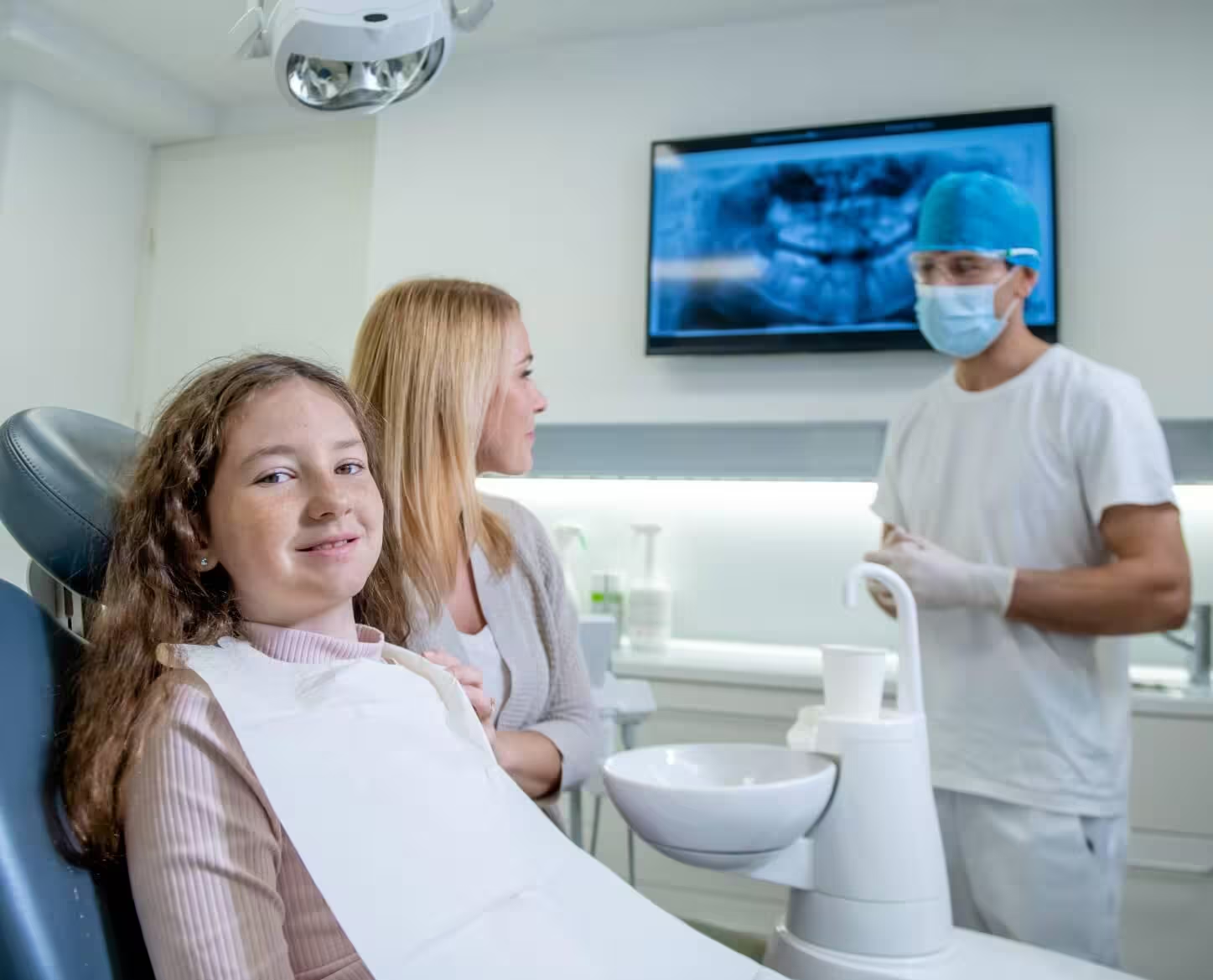
It starts with a proper look and an X-ray. A panoramic image shows the whole jaw - where the roots sit, how the tooth is angled, and how close it is to the nerve that runs through the lower jaw. That picture is what decides whether removal is straightforward or needs more care, and it is what we base the quote on.
We will also talk about anaesthetic and sedation. Many wisdom teeth are removed comfortably under local anaesthetic alone. If you are anxious, or the tooth is more involved, we offer happy gas, oral sedation and IV sedation, and we will recommend one based on the tooth and on you.

On the day
Once the area is fully numb, you should feel pressure but not pain. A tooth that has come through is usually eased out in a few minutes. An impacted tooth takes longer - sometimes the gum is lifted back and the tooth is divided into sections so it can be removed with less force on the surrounding bone. Either way, we tell you what is happening as we go.
Most appointments are done well within the hour. You will leave with gauze to bite on, written aftercare, and a clear idea of what the next few days will feel like.
Recovery, briefly
Expect the area to be sore for a few days and swollen for up to a week, with the second and third days usually the peak. Soft food, cold packs for the first day, and pain relief taken regularly rather than waiting for the pain to arrive all make a real difference.
The one complication to know about is dry socket - the blood clot in the socket coming away too early, leaving the bone exposed. It is painful, it is treatable, and it is far less likely if you avoid smoking, straws and vigorous rinsing for the first few days. We have written a separate guide to the day-by-day of recovery, linked below.
Cost and cover
The cost depends mainly on how the tooth is sitting, which the X-ray tells us, and on whether sedation is involved. We give you the figure after the assessment and before anything is booked. Wisdom teeth are not covered by ACC unless an accident is involved, which is rare for this particular tooth.
We are at 12 Lake Esplanade in central Queenstown, with free off-street parking. Ring 03 441 8248 or send a message to book an assessment.
General information, not a diagnosis. Written and reviewed by Dr Adrian Paul, BDS (Otago), principal dentist at Lakeside Dental Practice, Queenstown. If something is worrying you, see a dentist.